


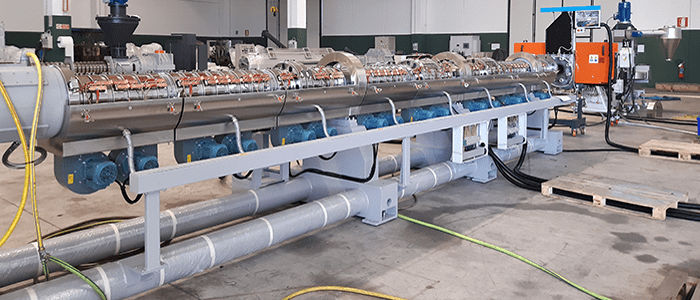
FAE SRL, specialists in electrical panel design for OEMs in the plastics sector across Italy and Switzerland, needed a drive solution that could meet the rigorous demands of continuous operation, high power density, and seamless integration with modern control architectures.
With a long-standing relationship with Nidec Drives, the company turned to Commander C300 and Unidrive M700 drives to power its latest generation of extrusion systems.
What is a plastic material regeneration system?
Also known as plastic granulation or extrusion recycling, this process converts landfill sourced or post-consumer plastic waste into reusable plastic granules. These granules support a circular economy by serving as raw materials for new plastic products.Why does this matter?
This process not only diverts plastic from landfills, reducing environmental pollution and conserving space, but also significantly lowers the demand for new plastic production, which is energy intensive and reliant on fossil fuels. This places the responsibility and opportunity firmly in the hands of manufacturers. By regenerating plastic into reusable granules, OEMs can reduce their carbon footprint and contribute to a more circular economy.Efficiency in action – real world energy and cost savings
By selecting Nidec Drives products, FAE achieved more than just performance, they unlocked measurable efficiency gains. Compared to alternative solutions, the M700 drives reduced panel power dissipation by up to 2,800 watts, resulting in an estimated 24,528 kWh of energy saved annually. This translates to approximately £3,679 in yearly cost savings, based on average industrial electricity rates. Beyond the direct energy reduction, the lower heat output also decreased the demand on panel cooling systems, contributing to further operational savings and improved system longevity. These benefits, combined with the compact size of the drives, allowed for a more streamlined panel design, maximizing space and minimizing thermal load.
Read the full case study:

Impressed? Contact us for your automation needs